
September 7, 2026 · NASA Jet Propulsion Laboratory · 3 min read
NASA Finds Amazon Drought Leaves Long Legacy of Damage
A single season of drought in the Amazon rainforest can reduce the forest's carbon dioxide absorption for years after the rains return.
A single season of drought in the Amazon rainforest can reduce the forest's carbon dioxide absorption for years after the rains return, according to a study published in the journal Nature. This is the first study to quantify the long-term legacy of an Amazon drought.
A research team from NASA's Jet Propulsion Laboratory in Pasadena, California, and other institutions used satellite lidar data to map tree damage and mortality caused by a severe drought in 2005. In years of normal weather, the undisturbed forest can be a natural carbon "sink," absorbing more carbon dioxide from the atmosphere than it puts back into it. But starting with the drought year of 2005 and running through 2008, the Amazon basin lost an average of 0.27 petagrams of carbon (270 million metric tons) per year, with no sign of regaining its function as a carbon sink.
At about 2.3 million square miles (600 million hectares), the Amazon is the largest tropical forest on Earth. Scientists estimate that it absorbs as much as one-tenth of human fossil fuel emissions during photosynthesis. "The old paradigm was that whatever carbon dioxide we put up in emissions, the Amazon would help absorb a major part of it," said Sassan Saatchi of NASA's JPL, who led the study.
But serious episodes of drought in 2005, 2010 and 2015 are causing researchers to rethink that idea. "The ecosystem has become so vulnerable to these warming and episodic drought events that it can switch from sink to source depending on the severity and the extent," Saatchi said. "This is our new paradigm."
Drought from the ground
"The first thing we see during a drought is that the trees may lose their leaves," Saatchi said. "These are rainforests; the trees almost always have leaves. So the loss of leaves is a strong indication the forest is stressed."
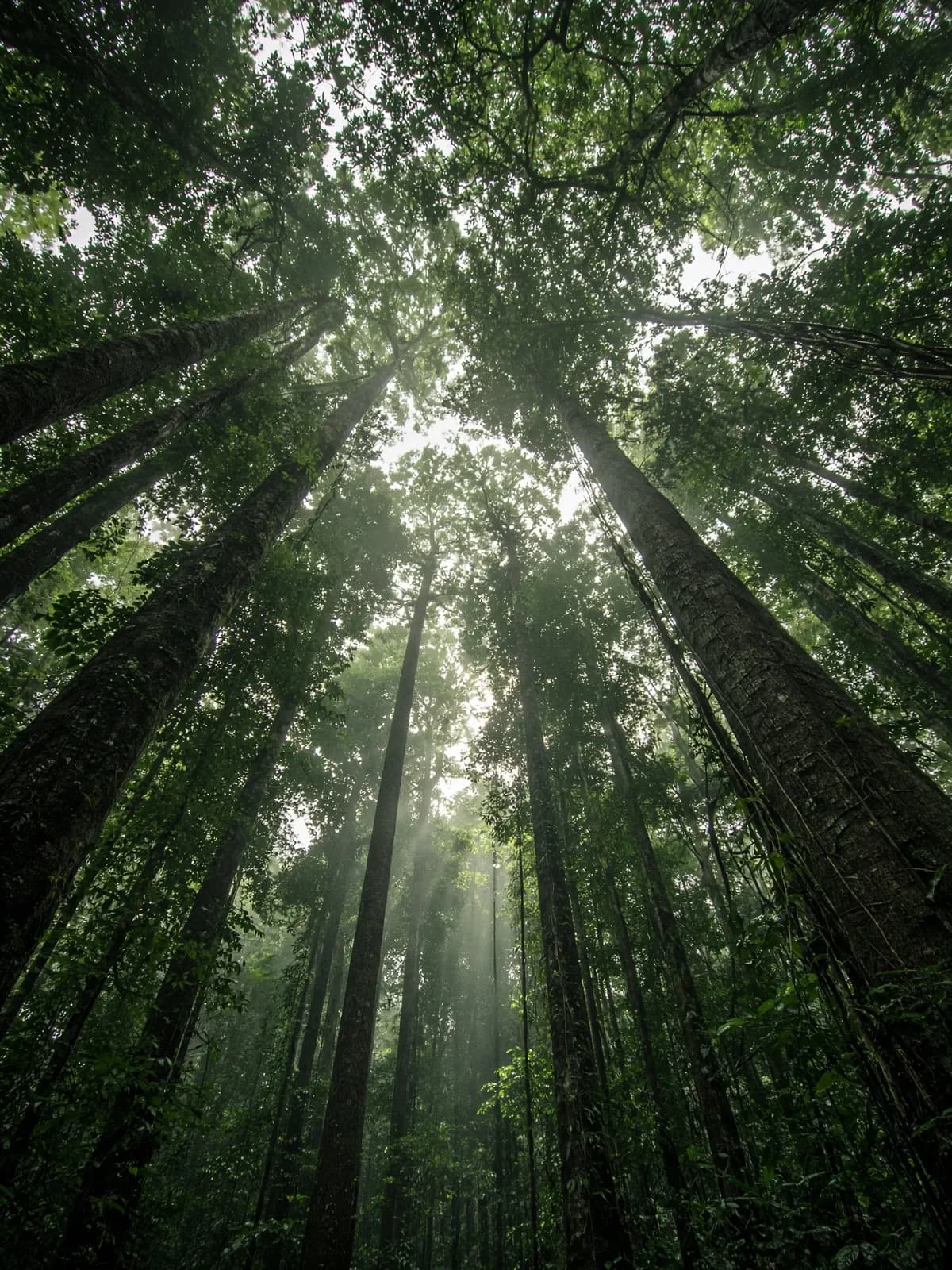
Observers on the ground also notice that droughts tend to disproportionately kill tall trees first. Without adequate rainfall, these giants can't pump water more than 100 feet up from their roots to their leaves.
Drought from space
The research team used high-resolution lidar maps from the Ice, Cloud, and land Elevation Satellite (ICESat). They found that following drought, fallen trees, defoliation and canopy damage produced a significant loss in canopy height, with the most severely impacted region declining an average of about 35 inches (0.88 meters) in the year after the drought.
Saatchi noted that half of the forest's rainfall is made by the forest itself. A drought that kills forest trees thus not only increases carbon emissions, it reduces rainfall and extends dry-season length. Those changes increase the likelihood of future drought.
If droughts continue to occur with the frequency and severity of the last three events, Saatchi said, the Amazon could eventually change from a rainforest to a dry tropical forest. That would reduce the forest's carbon absorption capacity and its biological diversity.
What this means for a Legal Reserve
If a single drought can reduce carbon uptake for years, a reserve cannot be judged by one snapshot. You have to look at the series: how the forest was before, during and after the event.
That is why every reserve on Neutraza has a history of satellite analyses rather than a one-time seal. With each new Sentinel-2 image, the coverage index is recomputed and stored with the scene date; when clouds get in the way, Sentinel-1 radar — which sees through them — fills the gap. A dip in greenness after a drought shows up on that timeline, and so does the recovery when it comes.
For the Guardian who looks after the land, that record matters too: it shows the forest was kept standing even in a hard year, and it separates climate stress from clearing.
Source: NASA Finds Amazon Drought Leaves Long Legacy of Damage. Public domain text and image from a U.S. government agency.