
September 9, 2026 · NASA Jet Propulsion Laboratory · 3 min read
NASA Finds Good News About Forests and Carbon Dioxide
A NASA-led study shows that tropical forests may be absorbing far more carbon dioxide than many scientists thought: 1.4 billion metric tons out of a global total of 2.5 billion.
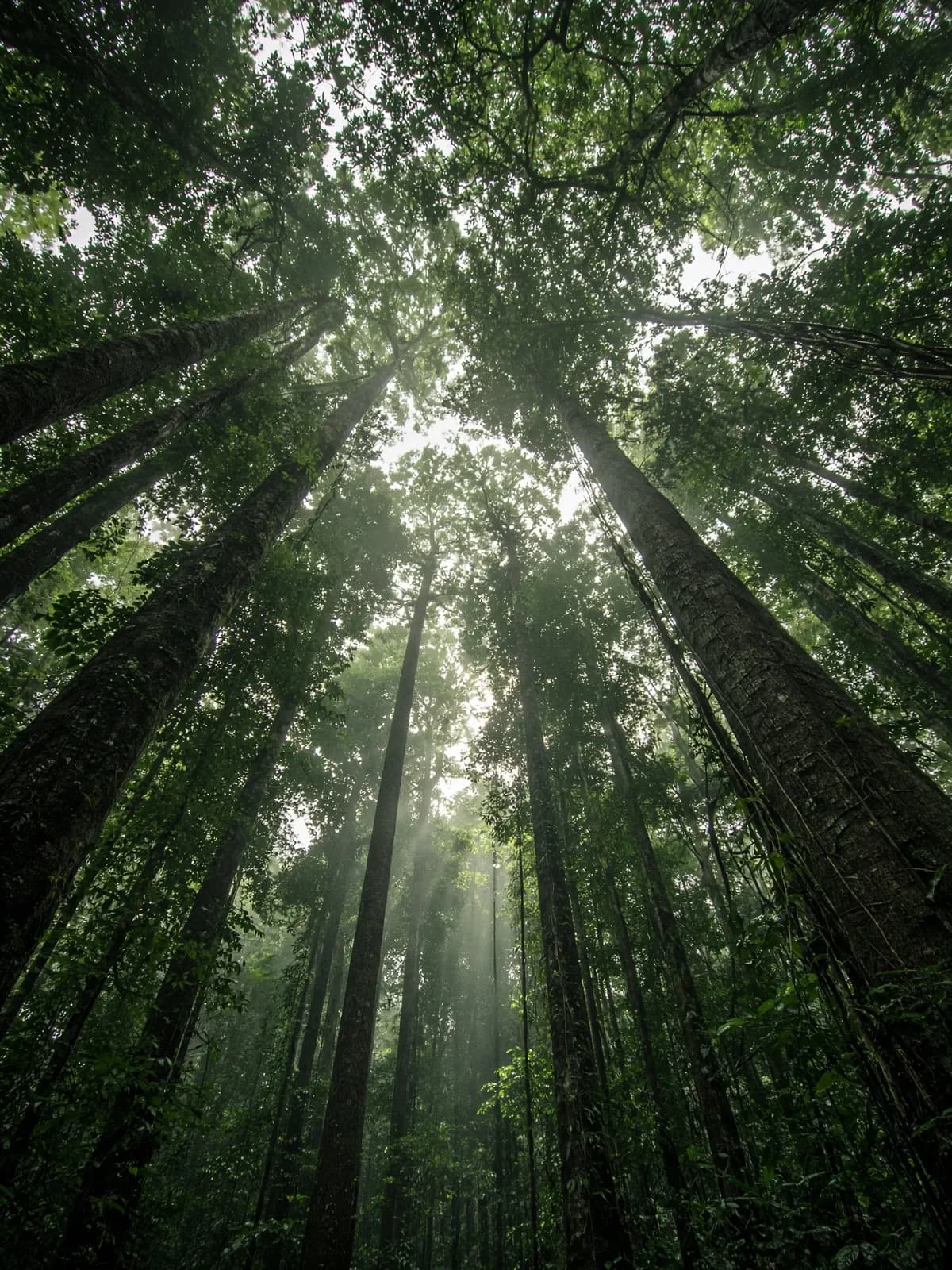
A new NASA-led study shows that tropical forests may be absorbing far more carbon dioxide than many scientists thought, in response to rising atmospheric levels of the greenhouse gas. The study estimates that tropical forests absorb 1.4 billion metric tons of carbon dioxide out of a total global absorption of 2.5 billion — more than is absorbed by forests in Canada, Siberia and other northern regions, called boreal forests.
"This is good news, because uptake in boreal forests is already slowing, while tropical forests may continue to take up carbon for many years," said David Schimel of NASA's Jet Propulsion Laboratory, Pasadena, California. Schimel is lead author of a paper on the new research in the Proceedings of the National Academy of Sciences.
Forests and other land vegetation currently remove up to 30 percent of human carbon dioxide emissions from the atmosphere during photosynthesis. If the rate of absorption were to slow down, the rate of global warming would speed up in return.
The new study is the first to devise a way to make apples-to-apples comparisons of carbon dioxide estimates from many sources at different scales: computer models of ecosystem processes, atmospheric models run backward in time, satellite images, data from experimental forest plots and more.
"Until our analysis, no one had successfully completed a global reconciliation of information about carbon dioxide effects from the atmospheric, forestry and modeling communities," said co-author Joshua Fisher of JPL. "It is incredible that all these different types of independent data sources start to converge on an answer."
As human-caused emissions add more carbon dioxide to the atmosphere, forests worldwide are using it to grow faster, reducing the amount that stays airborne. This effect is called carbon fertilization. "All else being equal, the effect is stronger at higher temperatures, meaning it will be higher in the tropics than in the boreal forests," Schimel said.
But climate change also decreases water availability in some regions and makes Earth warmer, leading to more frequent and larger wildfires. In the tropics, humans compound the problem by burning wood during deforestation. Fires don't just stop carbon absorption by killing trees, they also spew huge amounts of carbon into the atmosphere as the wood burns.
What this means for a Legal Reserve
If tropical forests absorb more carbon dioxide than we thought, every hectare left standing is worth more than it looks — and every hectare cleared costs more.
In Brazil, the Legal Reserve is the share of every rural property that the law requires to stay under native vegetation: up to 80% in the Amazon. Much of that forest exists only on paper, or with no one watching it. Neutraza's idea is to give that hectare an identified supporter: the Holder adopts hectares in a specific reserve, receives a certificate with a verifiable number and hash, and follows by satellite whether the forest is still there.
It is not a generic carbon credit: it is a piece of forest with an address, a known owner and public monitoring.
Source: NASA Finds Good News on Forests and Carbon Dioxide. Public domain text and image from a U.S. government agency.